Written by Jillian Gordon
Medically reviewed by Dr. Haleem Mohammed, Global Chief Medical Officer at Gameday Men’s Health
At a Glance
- TRT is a medically supervised treatment for diagnosed testosterone deficiency, not a quick performance boost.
- TRT is often incorrectly confused with steroid use.
- Low testosterone can affect men of different ages, not just older men.
- Proper testing, personalized treatment and ongoing monitoring are essential parts of TRT care.
- TRT isn’t necessarily a forever treatment.
As testosterone replacement therapy (TRT) continues to gain attention for its potential to help men address the effects of low testosterone (namely low energy, low libido, muscle loss etc.), misinformation about the treatment has also become increasingly common. In fact, even the treatment itself is often miscategorized as a means of boosting performance rather than a prescribed medical treatment for properly diagnosed testosterone deficiency.
With a flood of information making its way into mainstream media, it can be tough to separate fact from fiction.
To help you get the answers you need, we’re breaking down five common TRT myths and sharing what the research actually says about this increasingly popular approach to men’s health.
Myth #1: TRT Doesn’t Actually Work
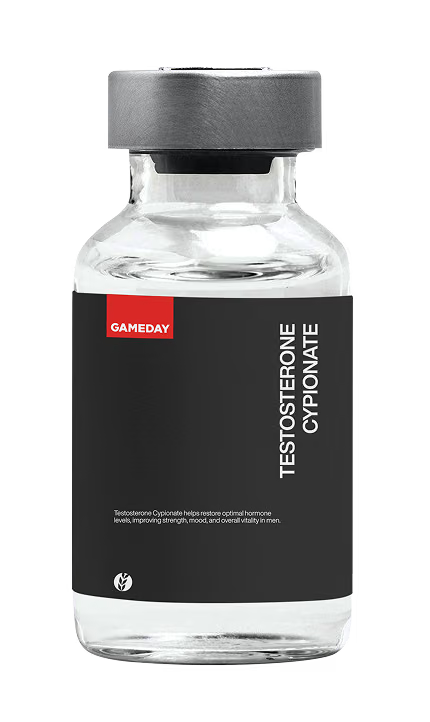
Before diving into how TRT works, it’s important to note that the therapy is designed to restore testosterone in men with clinically low testosterone levels, not serve as a quick-fix performance booster. Once low testosterone is properly diagnosed by an in-clinic physician, TRT is a scientifically backed treatment that may offer a range of benefits. In fact, recent studies have linked TRT to improvement in sexual function, bone density, muscle mass, body composition, mood, and quality of life.
That doesn’t mean you’ll experience results overnight, however. TRT benefits can vary depending on your testosterone levels, symptoms and overall health. Some results may become noticeable within weeks, while other improvements can take several months. That’s why proper testing, an individualized treatment plan and ongoing monitoring are essential to determining whether TRT is a fit.
The bottom line: The real question isn’t whether TRT works, it’s is TRT right for you? The best place to start is by knowing your numbers.
Schedule an appointment at your local Gameday Men’s Health clinic to have your testosterone levels tested, discuss your symptoms with a qualified provider and find out whether TRT is the right next step.
Myth #2: TRT is The Same as Steroid Use
Because anabolic steroids are synthetic derivatives of testosterone, TRT can get confused with the steroid use often associated with bodybuilders or athletes. But there’s an important distinction: TRT is a medically supervised treatment for men diagnosed with testosterone deficiency. Anabolic steroid use (or misuse) typically works to push testosterone beyond normal levels within the body.
“Men picture a bodybuilder injecting 10x a normal dose to get huge. That’s not what hormone replacement therapy is,” explains Dr. Haleem Mohammed, MD, MBA, Chief Medical Officer at Gameday. “TRT restores a guy to the level his own body should be making. We’re treating a deficiency not chasing a number into the 2000 range. If monitored correctly, a treated man’s blood levels look like a healthy 30-year-old, not a competitive power lifter.”
Dr. Hal also stresses the importance of proper diagnosis, dosing and ongoing medical monitoring. “We have had plenty of guys come off TRT under supervision when it makes sense. It’s a treatment with a monitoring plan.”
The bottom line: TRT isn’t the same as steroid use. It’s also not a shortcut to bigger muscles or better performance. When prescribed appropriately, the goal is to address a diagnosed testosterone deficiency while regularly evaluating how the patient is responding to treatment.
Myth #3: TRT is Only for Older Men
While testosterone levels may gradually decline with age, low testosterone can affect men of all ages. Studies show younger men can experience testosterone deficiency due to factors like medical conditions, being overweight, poor sleep habits, or previous anabolic steroid use.
“I see guys in their late 20s and 30s with real deficiency,” says Dr. Hal. “Sometimes I can trace it back to a pituitary cause, but most often it’s tied to carrying too much weight, terrible sleep, chronic stress, or a past cycle of steroids that they never fully recovered from. The idea that low T is something you earn at 50 is just wrong.”
The bottom line: Age alone doesn’t determine testosterone levels. If you’re experiencing potential signs of low T, regardless of your age, testing can help determine whether testosterone deficiency may be playing a role.
Myth 4: TRT is Too Expensive
So, how much does TRT actually cost? At Gameday, pricing can vary depending on your individual treatment plan, but it’s important to remember that the cost of TRT goes beyond the medication itself.
TRT is a medically monitored treatment, and we ensure your plan is personalized to your needs. Depending on your treatment plan, this may include testosterone testing, follow-up lab work and regular monitoring to track your levels, symptoms and overall response to treatment.
When considering the cost of TRT, make sure you understand exactly what’s included. Your local Gameday clinic can walk you through your treatment options, associated costs and what to expect from your ongoing care before you get started.
Gameday clinics also offer a range of additional men’s health and performance services, making it easier to address multiple health goals in one place. Depending on your location, you can explore peptide therapy, vitamin and nutrient injections, sexual wellness treatments, weight management, and other performance-focused services.
The bottom line: When it comes to TRT, cost is about more than the price of testosterone. It’s about receiving personalized treatment backed by proper testing, medical expertise and ongoing monitoring throughout your TRT journey.
Myth #5: Once You Start TRT, You Can Never Stop
TRT can be used as an ongoing treatment for testosterone deficiency, but that doesn’t mean it has to be forever. Instead, TRT must be medically monitored throughout treatment to evaluate symptoms and assess how the body is responding.
While you’re on TRT, your body’s natural testosterone production may decrease. Testosterone levels may drop if treatment is discontinued, but studies show that normal hormonal signaling and testosterone production can resume over time. That’s why starting, adjusting or stopping TRT should always be done under the guidance of a medical professional.
The bottom line: The goal of TRT isn’t simply to keep you on therapy indefinitely, but to continually evaluate whether treatment remains appropriate for you.
TRT can be an effective treatment for men diagnosed with low testosterone, but understanding the facts is key to determining whether it’s right for you. With proper testing, personalized care and ongoing medical monitoring, you can make informed decisions and find a plan that makes sense for you.
Jillian Gordon, Writer
Jillian Gordon is a Los Angeles-based writer with over a decade of experience covering health and wellness. She has written extensively about longevity science, gut and immune health, nutrition, and emerging wellness trends, with a focus on helping readers make informed decisions about their health.
Dr. Haleem Mohammed, Global Chief Medical Officer
Dr. Haleem Mohammed, MD, MBA, is the Global Chief Medical Officer of Gameday Men’s Health and an award-winning board-certified internal medicine physician specializing in men’s health and performance, including hormone optimization, weight management, erectile performance, peptide and vitamin therapy, musculoskeletal recovery solutions, longevity and precision medicine.