Written by Jillian Gordon
Medically reviewed by Dr. Haleem Mohammed, Chief Medical Officer at Gameday Men’s Health
At a Glance
- Enclomiphene is an oral medication that helps stimulate the body’s own testosterone production.
- Unlike TRT, enclomiphene does not supply the body with testosterone from an outside source.
- Enclomiphene may be an option for men who want to maintain natural testosterone and sperm production.
- Enclomiphene isn’t right for everyone, and bloodwork can help determine whether you’re a good candidate.
- Regular lab testing and medical monitoring are important for tracking results and potential side effects.
If you’ve been researching ways to increase low testosterone, there’s a good chance you’ve come across enclomiphene. The once or every other day oral medication has quickly surged in popularity as an alternative to testosterone replacement therapy (TRT) injections, creams or pellets. But what exactly is enclomiphene and how does it differ from TRT?
While both treatments can be used to boost testosterone levels, their approaches are fundamentally different. TRT provides the body with testosterone from an outside source, and enclomiphene is designed to help the body produce more testosterone on its own. For some, this makes enclomiphene the more appealing option, especially for those who hope to preserve their own natural testosterone and sperm production.
But that doesn’t mean enclomiphene is the right choice for everyone. “Whether it will work for you depends on the cause of your low testosterone,” says Dr. Haleem Mohammed, MD, MBA, Chief Medical Officer at Gameday Men’s Health.
Here’s what you need to know about how this testosterone-boosting medication works, how it compares to TRT and who may be a good candidate for treatment.
What Is Enclomiphene?
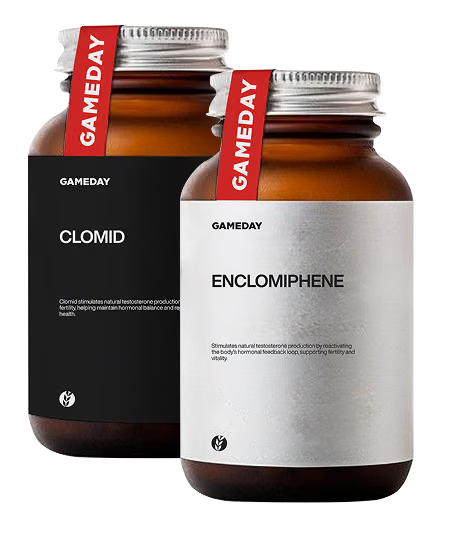
Enclomiphene is an oral selective estrogen receptor modulator (SERM). What does that mean exactly? Rather than simply supplying the body with more testosterone, it works to strengthen the hormonal signaling between the brain and the testes, encouraging the body to increase its own testosterone production.
If the name sounds familiar it’s because enclomiphene is actually one of the two components that make up clomiphene, a medication traditionally used to treat infertility in women. Research shows enclomiphene works to boost testosterone by stimulating two key hormones, luteinizing hormone (LH) and follicle-stimulating hormone (FSH) by increasing GNRH which help regulate testosterone and sperm production in men.
If you’re experiencing symptoms of low testosterone and want to know whether enclomiphene may be an option, start by getting your testosterone levels checked. Your local Gameday Men’s Health clinic can evaluate your hormone levels and discuss your symptoms and health history to help determine if treatment may be right for you.
Enclomiphene vs. TRT: What's the Difference?
As mentioned earlier, enclomiphene and TRT both work to boost testosterone levels in men with diagnosed testosterone deficiency, but they take two very different approaches.
TRT supplies testosterone to the body from an outside source. While often effective, this approach may also suppress the body’s hormonal signaling for producing natural testosterone or sperm on its own. “Testosterone replacement gives your body testosterone from the outside, through an injection, a cream or a pellet,” explains Dr. Hal. “Your brain reads that level, decides you have plenty, stops sending the signal that tells your testicles to make their own.”
Enclomiphene, on the other hand, takes a different approach by stimulating hormonal signaling within the body. “Enclomiphene is a daily pill that works on the brain instead,” says Dr. Hal. “It removes a brake in the signaling system, so your brain sends a stronger message to your testicles. They respond by making more testosterone. The testosterone in your blood is your own.”
Who Is a Good Candidate for Enclomiphene?
Enclomiphene isn’t always appropriate for every man with low T. As Dr. Hal explains, your treatment approach is entirely dependent on why your testosterone is low to begin with, something your bloodwork will indicate during your initial testosterone evaluation.
Generally speaking, enclomiphene is a better match for men whose testes can produce testosterone but aren't receiving sufficient hormonal signaling. In contrast, TRT is typically a better course of treatment for men who are experiencing testicular failure. If you’ve suffered testicular damage associated with chemotherapy, surgery or a genetic condition, for example, stimulating hormonal signaling with enclomiphene is unlikely to increase testosterone levels.
“Enclomiphene is for men whose testicles work fine but aren't getting a strong enough signal. Bloodwork tells us that,” says Dr. Hal.
At Gameday Men’s Health clinics, comprehensive lab testing and an in-person evaluation help providers understand why your testosterone is low, then use those findings to develop a personalized treatment plan. Schedule your evaluation today.
Enclomiphene Side Effects: What Should You Know?
As with any medication, understanding the potential side effects of enclomiphene is an important part of deciding whether it’s a right treatment approach for you. So what might patients experience while taking it? “Headache is the most common side effect by a wide margin,” shares Dr. Hal. “Some men experience nausea or an upset stomach. Hot flashes occur, which catch men off guard.”
Nipple tenderness can be one of the more unexpected side effects. “As your testosterone rises, estrogen rises with it,” explains Dr. Hal. “That shows up first as sore or tender nipples.”
Potential enclomiphene side effects may include:
- Headache
- Nausea or upset stomach
- Hot flashes
- Mood changes or irritability
- Increased estrogen levels
- Breast or nipple tenderness
Regular lab work and medical monitoring can help you get ahead of uncomfortable side effects early. Tracking your hormone levels and how you’re feeling can help identify what’s working and whether your treatment needs to be adjusted.
Gameday clinics provide ongoing monitoring so your care team can evaluate both your response to enclomiphene and any changes that occur along the way.
Enclomiphene or TRT: Which Is Right for You?
When it comes to choosing between enclomiphene and TRT, there’s no universal winner. TRT is a known, reputable treatment for diagnosed testosterone deficiency, while enclomiphene offers an alternative path for men whose bodies are still capable of producing testosterone naturally.
Factors like your age, fertility goals and personal lifestyle can all play a role in selecting the right course of treatment, but the biggest determinant is the reason your testosterone is low in the first place.
Safety is also an important factor. Research on enclomiphene has found that it can effectively increase testosterone with relatively low rates of adverse effects, but larger studies are still required to better understand its long-term safety.
At Gameday Men’s Health, you don’t have to make this decision on your own. Our care team is here to talk through your symptoms, history, health goals, and provide comprehensive lab testing so you can build a personalized treatment plan according to your needs.
Jillian Gordon, Writer
Jillian Gordon is a Los Angeles-based writer with over a decade of experience covering health and wellness. She has written extensively about longevity science, gut and immune health, nutrition, and emerging wellness trends, with a focus on helping readers make informed decisions about their health.
Dr. Haleem Mohammed, Global Chief Medical Officer
Dr. Haleem Mohammed, MD, MBA, is the Global Chief Medical Officer of Gameday Men’s Health and an award-winning board-certified internal medicine physician specializing in men’s health and performance, including hormone optimization, weight management, erectile performance, peptide and vitamin therapy, musculoskeletal recovery solutions, longevity and precision medicine.